Why Community Connections Matter in Assisted Living
The need for connection doesn’t disappear as you grow older. You still want to be part of something: maybe it’s sharing good stories over breakfast, or getting a wave from someone across the hall, or even helping to set up chairs before game night. These may seem trivial, but they help to create the difference between just “living somewhere” and feeling like you’re actually at home.
The reality is that moving into assisted living brings up a lot of questions. Will I still know people here? Will I have someone to talk with, to laugh with? Will I have someone to ask how my day was? All good questions. And while “community” is used a lot these days, in assisted living, it has a very real meaning; it is the connections you have and new relationships you develop that end up influencing your day-to-day life.
Community means more than just chatting in the hall or knowing faces around you. Community can improve your mood, improve your physical activity, and give you a reason to get up in the morning, just knowing you have something to look forward to! And that is worth thinking about.
What “Community” Really Means in Assisted Living
In assisted living, community is not just being 10 feet or 30 feet away from people. You can be around others and still feel like you don’t belong. What makes the difference is meaningful interaction, where people actually notice if you are there and miss you when you are not.
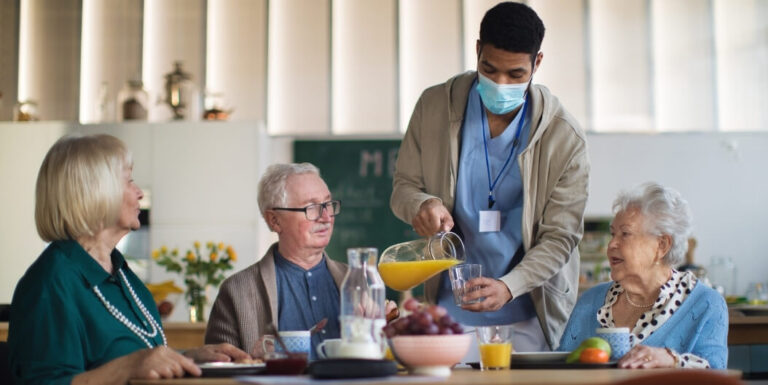
You see the same residents or staff day after day, so daily contact feels like a natural extension of your routine. It’s wonderful when someone pours your coffee without checking how you take it because they already know. It’s nice when a staff member recognizes you were at the movie last night and asks if you enjoyed it. This is not scripted moments, it is recognition that you are a part of the life there.
It’s a bit like sitting down with the same tablemates every morning. Maybe you’re simply updating each other with family news or discussing the weather for a few minutes. This sense of development over time becomes more than just talk; it is familiarity. And familiarity is not to be underestimated; it’s the comfort of knowing you have a place where you belong, without trying too hard.
Emotional Benefits of Staying Connected
There’s a lot that can be said for the emotional boost that goes with social connections. Loneliness doesn’t always raise its hand, but it can creep in if too many days go past without someone engaging in a conversation that holds personal meaning.
When you have people checking in, whether it is simply to say, “how are you feeling today?” or if it is a more extended “What do you want to talk about?” you are quickly reminded you are not traversing this life stage alone, and if we are honest, you may not realize how much that matters until you have it again.
Social interaction has a way of brightening the mood. When you are listening to a funny story, or even sharing one yourself, not much else can consume your worry. It eases stress, and you are mentally healthier as you embrace a conversation that invites back-and-forth participation.
And although it is not about the statistics, researchers show that strong social connections tend to result in reduced rates of depression in older adults. Research has substantiated this idea, but you probably do not need one to understand that life is not as rich when you are alone.
Physical Health Ties to Social Engagement
Social connections not only warm the mind up for activity, they warm the body up, too! Even the simplest social activity is a trigger. Walking down to the dining room, strolling to the lounge for a book club meeting, or joining a small group for an afternoon stretch class, they all keep you moving and staying active.
As you start interacting more regularly, your habits become healthier by default. You will eat balanced meals more often if you know someone is waiting for you to sit down. You are more likely to keep up your personal care if you have something planned on the calendar. It is a gentle nudge towards healthier practices.
There is yet another layer, in a community with neighbors who see you every day, so any changes in your health are likely to be seen sooner. Maybe a neighbor notices you’re not walking as stably as you used to, or one of the staff notices you skipped lunch a couple of times. Those clues are important, and a connected community makes it too hard to ignore.
The Role of Shared Activities in Building Bonds
Planned activities are more than just something to pass the time. They provide easy opportunities for actual conversation and shared experience. A trivia game stirs friendly competition. A cooking demo becomes recipe swapping. A craft activity ends with someone offering to help you finish your project the next time.
Variety is vital because not everyone is going to want the same thing. One resident may be excited about a painting class, another may want chair yoga or a group about current events. The more choices there are, the more likely everybody will find something they think is “their thing”.
Staying Connected to the Wider Community
Just because there are walls that create an assisted living community, doesn’t mean that is all there is to your world. Maintaining a connection with the broader community provides interest and diversity, and allows you to feel like you are playing a role beyond who is in your immediate circle.
That may take the form of visits from local schools, musicians, or community groups. It could be group outings to a park, a theater, or even just a favorite coffee shop. These occasions blur the line between “inside” and “outside,” which is useful to keep life fresh and stimulating.
Some residents are also involved in projects outside the building: food drives, fundraising for charities, and letter-writing campaigns about issues in the neighborhood. You are not just watching life unfold; you are a part of it, which is an effective therapy for feeling like a bystander.
What to Ask When Choosing a Community
When thinking about assisted living options, the makeup of the community’s social life is just as important as the layout.
- Are there opportunities for residents to gather together each day, formally or informally?
- How often do they have group outings or events?
- Can residents suggest or help plan activities?
- Are there spaces: lounges, courtyards, shared dining rooms, that easily provide for unplanned interactions?
- Is there a mix of large and small gatherings so that everybody can find their comfort level?
These questions go beyond just checking to see if “activities” are provided and get to the heart of whether the place is set up for true connection or only occasional interaction.
Experience A Community That Feels Like Home. Visit Asher Point Senior Living of Austin!
At Asher Point Senior Living of Austin, connection is part of the daily routine. Meal times are relaxed so residents can take their time and converse. Outings are not just scheduled; they are discussed in advance with the people who are going.
There are group activities for those who enjoy them, and there are conversations happening in quieter corners. Residents are involved in planning events so that the calendar reflects a real interest, not just an activity that sounds good on paper.
Even the physical spaces happen to afford connection: comfortable lounges, outdoor seating to increase the likelihood of people’s paths crossing, and hallways wide enough to stop and converse without feeling like you are blocking the way.
If you ever want to experience genuine connection, schedule a tour and come visit Asher Point Senior Living of Austin. Share a meal, join a program, or simply sit and have a conversation with the residents who live here. You’ll notice the impact of connection on the way each day feels, and why it is so important.